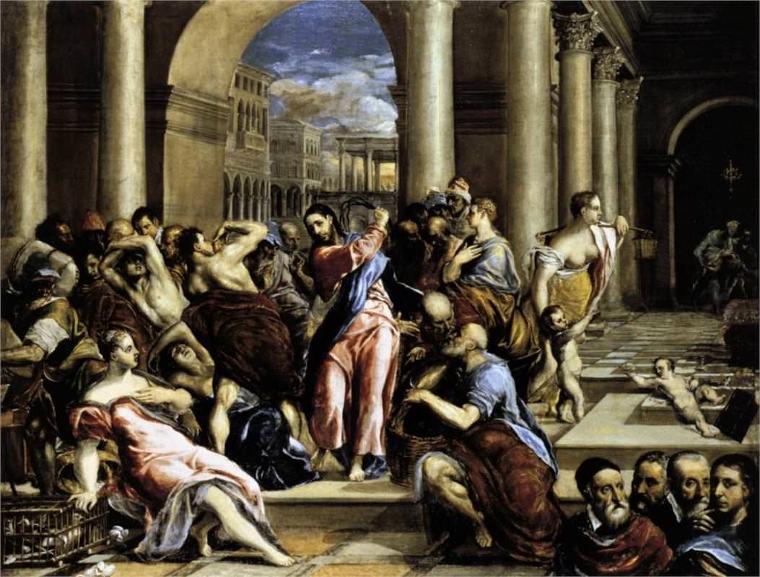
-Christ Cleansing the Temple was painted by Domenikos Theotokopoulos
-This is showing where Jesus turned the tables in the temple where everyone was selling stuff instead of worshipping.
-John 2:13-22 explains the encounter
21.2
The French Revolution started because of many reasons. There was political conflict between the Monarchy and the nobles because of the "reform" of taxes. The Enlightenment also led to conflicts. The aristocracy and the bourgeoisie, two different types of people, were constantly hostile to each other. Louis XVI was a very ineffective ruler, leading to the dissatisfaction of his subjects and the weakening of his country. Economic hardships included food shortages.
21.3
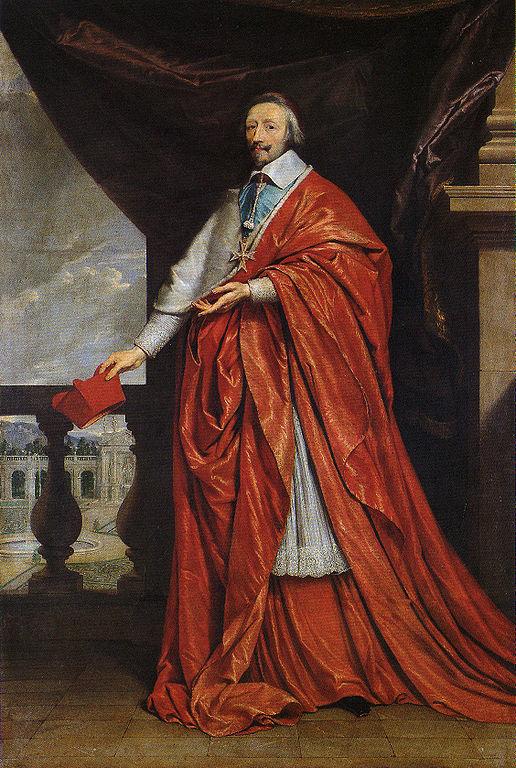
Richelieu was born in 1585 and died in 1642. He was very dedicated man who worked in the Catholic Church in France. He was known as a devót with views that were in favor of the Spanish. He was appointed Secretary of State for War and Foreign Affairs by Concini and the chaplain to the new queen, Anne of Austria. After Concini was murdered, Richelieu faded into the background until 1624 when he was given a spot on the Royal Council and was soon made Chief Minister. He did many things as Chief Minister including attacking the Huguenots, making the navy and army better, crushing rebellions, raising money, and supervising a foreign policy to make France the greatest power in Europe.
21.4
Peter the Great's Reforms and Impact on Russia
Peter wanted to modernize Russia. He made the church, education and areas of Russia’s economy much better. He wanted the wealth of the church because it was very rich. Education was a big deal to Peter, and he wanted his armies to be educated as well as normal citizens.
21.5
Chapter 22
22.2
22.3
Frederick the Great made many good changes to his kingdom such as religious freedoms, less censorship, and better education. But eventually he stopped making good changes, leaving serfdom even though he believed it was wrong. He made this choice because he needed the support of the wealthy landowners. He called himself the first servant of the state. He had enlightened ideas but was a little too concerned with his power to act on them.
Beethoven
Beethoven was baptized on December 17, 1770, in Bonn, Germany. He was a great musician, making new pairings with vocals and instruments constantly. He was deaf, and some of his best work was created during the last years of his life when he was completely deaf. He died at the age of 56 in 1827.
22.4
The Enlightenment influenced much of the US.. Constitution. Locke said that the consent of the people is how a government got it's power, while the Constitution starts with "We the people," it limits the government's power, and forms a representative government. Montesquieu's idea was the separation of powers. In America, we have three branches of government, thus the power is split up. Rousseau believed in direct democracy, which we follow holding elections for the President and for Congress. Voltaire thought religious toleration and freedom were important, just like what is protected in the Bill of Rights. Beccaria did not believe in torture and believed that those who are accused should still have rights. The Bill of Rights still protects the rights of the accused and makes it clear that torture is not an option. Over all, the Enlightenment helped form more than a few Constitutional beliefs in America, likely many more than other time periods have.
23.1
The Third Estate consisted of around 97% of France’s population. One group in the Third Estate were called the bourgeoisie. They lacked privileges that the upper estates enjoyed, even if they were as wealthy as some people in the 1st and 2nd Estates and they paid extremely high taxes. The other group was the workers and the most poor out of all of the estates. They were paid little and often had no money to support themselves so they starved. The peasants were sick of their lives and stood with Enlightenment ideology. They were inspired for change, believing that only good could come out of new leaders, but to make matters worse, France went into debt. Louis XVI and Marie Antoinette spent more money than they had, sending the whole country into debt. This could have been made right with a new, strong leader, but instead, Louis was a weak leader. He left these problems alone instead of dealing with them while they were able to be handled. Instead of cutting his spending, he waited until it was absolutely vital for him to pay attention to the financial struggles of his country. His solution was to tax the nobles. They decided to meet with a representative from each estate. Eventually the majority of the National Assembly wanted to overthrow the royalty, thus beginning the French Revolution.
23.2
23.3
Napoleon did not discard many changes that the Revolution provided. He stood for laws that would help the government, while trying to meet some goals of the Revolution. He first wanted to get the economy back to normal. He put into place a good taxing system and created a nation-wide banking system. Napoleon made an effort to end corrupt government by getting rid of those responsible for the mistrust. He set up lyćees which were government run schools for boys. Once graduating from these schools, you could be appointed into office, but not for family’s sake, instead for merit. When dealing with religion, Napoleon signed a concordat, or an agreement. This agreement was with Pope Pius VII. They established that the government would acknowledge the Church, but that the government would dismiss the Church in national matters. He also set up the Napoleonic Code to enforce better laws.
23.4
23.5
The Congress of Vienna’s results include efforts of many countries to maintain a balance of power, Nationalism, and Spanish Independence. Even later, the French Revolution has kept influencing people’s decisions. Now most people believe that democracy is the best way to run a government, unlike before the Revolution happened.
24.1
Brazil Revolution: A member of the Portuguese royal family helped free Brazil from Portugal in a bloodless and nonviolent shift in power. In 1822, so many people signed a petition for freedom from Portugal that King John agreed. Dom Pedro started to rule Brazil.
24.2
24.3
23.4
Romantic art example: paintings with a lot of nature in it.
Realistic art example: paintings of actual live people.
Difference: Romantic art dealed more with emotion and ideas than the reality of Realistic art which made the dreams of Romantic art seem almost pointless.
Paris Street; Rainy Day by Gustave Caillebotte
In his painting, “Paris Street; Rainy Day," Gustave Caillebotte used different pastel colors to set a romantic tone. The couple in the main focus appear to be taking a stroll down the streets under one umbrella, showing the man's courtesy. The painting also shows the randomness of the streets in Paris with the different characters in the background each going their separate ways. Callebotte was a French Impressionist painter although he painted more realistically than many others of his time.
25.1
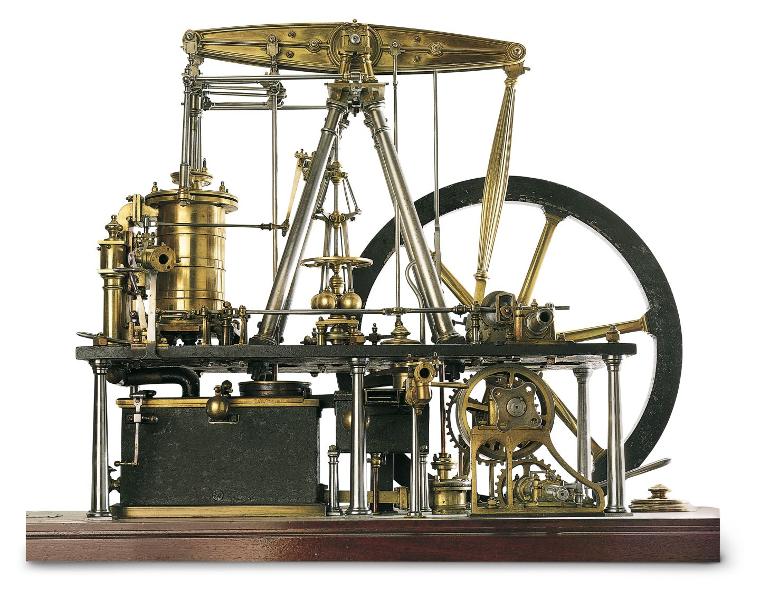
Watt's steam engine led to the development of the steamboat.
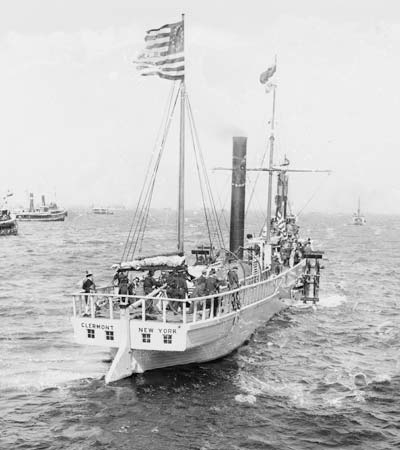
Boulton and Watt's Clermont was the original steamboat that cut the costs of transportation massively.
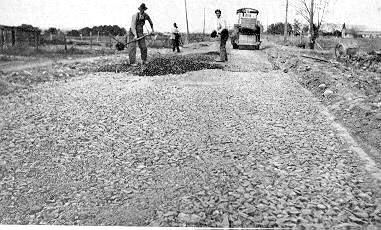
Macadam roads allowed heavy wagons to be able to travel in all weather conditions without worrying about sliding in mud.
The 4 major effects of the locomotive
The first main effect was that it helped manufacturers transport their stuff for cheap so they could work more on making and selling more goods. The second was the mining jobs and jobs working the railroads. The third was that it made England's fishing and agriculture industries much better. Lastly, they made traveling easier and encouraged people to take jobs that were farther out.
25.2
The middle class held most of the wealth and were the top of British society. Although some business oweners were richer than them, they were still considered better because of the way society looked at them. Landowners thought that the workforce was "vulgar" so they didn't care if the business owners were richer because they still weren't up to standards. In the late 1800s finally entrepreneurs and business owners looked on as equal while a large middle class was emerging. The working class had horrible living conditions from 1800-1850. They were desperate and angry so they destoryed the machines they thought had ruined their lives by putting them out of work. Many workers called Luddites led this movement by attacking factories while many workers rioted outside of them.
The good things that came out of the Industrial Revolution were jobs for workers, making the nation rich, helped technology and inventions move forward, and increasing the standard of people's living and making the production of goods much faster. Other benefits include health standards, nutrition, and better houses and living conditions. The working class finally started to get further in society through labor unions. The long term effects are working conditions are much better while houses are following suit. The government has been more focused on helping the urban areas in their countries or states as well.
25.3
Industrialization began in the united states with textiles. Samuel Slater came to the US in 1789 and brought with him the knowledge of how to build a spinning machine. The next year, Moses Brown opened the first factory in the united states. His factory only made the thread so they needed someone to make the other things. Francis Cabot Lowell and 4 investors opened a place that made everything needed to manufacture cloth. Eventually, after textiles were industrialized, the clothing and shoe industries came next. In Europe, industrialization started in Belgium. Belgium had a lot of iron and ore and also had developed waterways for transporting goods. In 1799, William Cockerill did the same thing as Slater and brought plans with him for spinning machinery. Germany industrialized railroads to connect it's growing cities. Many other countries also developed in certain areas.